Showing posts with label reviews. Show all posts

Sunday, September 19, 2021

Lost in Random review

I haven't written many reviews lately, but I just had to write one for Lost in Random because I was enthralled by it from beginning to end, managing to finish it in just over a week.  It is now a very strong contender for my Game of the Year, though it is by no means perfect which will get to in due time. 


Since the very first trailer dropped for Lost in Random and we got a first glimpse of the visual style, I knew I wanted to play it.  The comparisons to the visual style of The Nightmare Before Christmas were there for all to see from the start, though what the gameplay actually entailed wasn't as apparent at first glance. I am a fan of anything that takes place in a dark and witty fantasy world though, and I could see bits of Terry Pratchett's Discworld and American McGee's Alice in there too. What I discovered when I played through it were highly original game mechanics beyond just the look of the game.  Let me take you through what made this game so fun and special for me that I couldn't stop playing it until I had finished it.


The world of Random is divided up into six boroughs and when each resident reaches 12 years of age, the evil Nanny, under the employ of the Dark Queen, arrives to roll the black dice.  The resulting number dictates in which of the boroughs you will spend the rest of your life.  Even and Odd are two sisters that have grown up in Onetown and their family has been quite happy together despite being poor.  This happy family life is about to be torn apart though because Odd has reached her 12th birthday.  The black dice is rolled and things initially look good with a one being rolled meaning Odd can stay with her family.  

However, the Nanny manipulates the dice and changes it to a six at the last minute which means Odd is taken away to Sixtopia, the home of the Queen herself. From here Even vows to rescue her sister and sets out on an epic journey across all six boroughs to get her back. Shortly into the journey she find herself in the sacred Valley of the Dice, which is littered by mostly dormant dice.  A little one does come to her rescue in a fight against the Queen's automatons and from that point on joins Even in her quest, giving her vital assistance in battle through the use of cards.

Even having a bit of a chat with Dicey


The flow of battle goes a little something like this.  At first, Even can only use her slingshot which won't do any damage to enemies but can be used to destroy blue crystals growing from them which releases dice energy.  By running close by the dice energy with Dicey or your back or by sending him out with the RB button it will get sucked up into him and fill up your card meter,  You can then choose to roll Dicey when you have enough energy for a few cards or wait until you've filled up your energy completely to choose from 6 cards out of your deck of 15 maximum.  The number the Dicey rolls then dictates how many points you've got to spend on these cards with him only being able to roll a 1 or a 2 very early on in the game.  The cards vary from being free to use to costing 3 points for the very powerful ones. 

There are a few different types of cards including basic but useful damage cards that give you a temporary sword or of a bow to do direct damage to the automatons, ones that give you a one hit shield, and extremely useful ones that grant you an extra point for free or just lower the point cost of all cards in your hand by 1.  There are quite a few other kinds of cards including some that sounded cool in theory but then were pretty crap in practice, such as a cannon that you can drop on the field to fire at your enemies.  However, this cannon doesn't track the enemies, it just keeps firing directly ahead and then disappears after 30 seconds.  It will also hurt you if you get shot by it.  So I quickly removed that one from my deck and never used it again.  It did find the bombs incredibly useful as it is quite easy to lure a group of automatons close to them and then do massive damage.

Throughout the game there are also quite a few board game arenas where there is a massive chess piece that you need to get to a goal.  Every time you roll Dicey in combat the chess piece will move along the board the same number of spaces that he rolls.  Quite often the path of the chess piece will be block until you kill a certain enemy.  These board games take quite a while to finish but it is hard to fail them for the most part.  Should Even get killed you will have to start over but I found there was very little risk of that if I always kept a few healing potion cards in my deck.  There was one board game which was quite stressful because you are constantly being chased by a moving wall which will hurt you if it catches up to you, but I did still beat it on my first attempt. 

The only real difficulty spike I did encounter during my time with the game was in the very first boss fight against Royam, the evil mirror image of Twotown's mayor. This was partly my own fault though, because I was stubbornly trying to muddle through with the same deck I had been using since the start of the game.  When I finally did stop for a moment and put some better cards in my deck I beat him on my very next try.  Once again those bomb cards became incredibly valuable against Royam, especially the the final phase of the fight where you're having to deal with both him and a bunch of regular automatons at the same time. 

You can definitely see the likeness between Royam here and Oogie Boogie, can't you?


We've already touched on the visual influences for Lost in Random but it is still a cool look that works well for this game and the world that Zoink wanted to build. Everything has the feel of a stop motion animated feature about it.  On a technical level I didn't encounter a single problem at all while I was playing through on the Xbox Series X - not slowdown, glitching or any notable bugs of any kind which is impressive as I was playing it so close to launch and so many other games come out with all sorts of bugs and problems these days.  On the audio side of things, the voice acting is very strong across the board with believable performances from all involved and some quite memorable characters being created. The music is decent but once again it does wear its Elfman inspirations on its sleeve.  There are a few songs throughout the game that are well written and help to flesh out the world quite a bit as well.

Lost in Random took me around 15 or so hours in total to beat and I did take my time and make sure I completed every side quest that I encountered.  I didn't go out of my way to find every single hidden card or story book chapter but I did come across the majority of them throughout my travels.  I was quite satisfied with the total time spent with the game especially as this isn't a full priced release, costing about £25 in the UK with a small discount if you are an EA Play / Xbox Game Pass Ultimate member. 

My only real gripe with the game would be that combat can sometimes drag on for a long time because the cards that are chosen for your hand are random from the pool of 15 that you set, so you could for example keep getting health potions come up when you're at full health or get high cost cards that you don't have enough points to use. Some may find themselves getting rather frustrated with this system but I still enjoyed myself even during the fights that went on for 20 or so minutes. It's all part of the random nature of the world that Zoink has created.  I also think that it's a bit of shame that there is no physical version of the game at the moment.  I wouldn't be at all surprised if Limited Run Games or a similar company does something eventually, but these can be expensive and hard to get.

The combination of the art style, the story and the game mechanics all combine to deliver something that feels very fresh, despite the obvious stylistic inspirations that the game draws upon. It's for this reason that I am lining up Lost in Random as my potential Game of the Year. We still have a few months to go though and something else may come along to take that slot.  I do have my eye on Kena: Bridge of Spirits but I recently heard someone describe the combat as "souls like" which was enough to strike fear into my heart. We shall have to see when the game comes out next week.  I hope you enjoyed this review, I shall do my best to write these more often going forward!

Overall: 8 out of 10


Friday, January 17, 2020

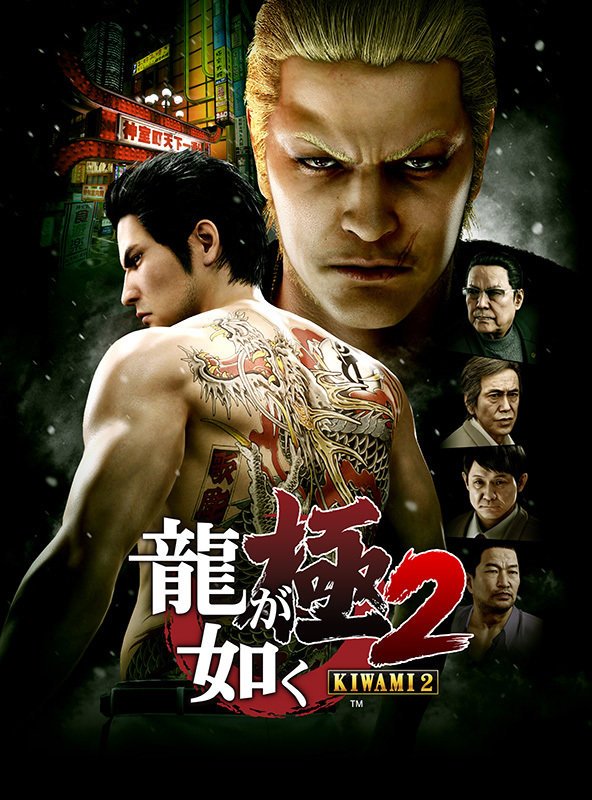
Yakuza Kiwami 2 mini review

Yakuza Kiwami 2 is a comprehensive remake of Yakuza 2 for the PlayStation 2, and to be honest it was sorely needed. The first two games were really starting to show their age but the story in each of them was still worth experiencing, so Sega took the new Dragon engine that they built for Yakuza 0 and Yakuza 6 and used it to build these remakes.  The director of these games has gone on record to say that if Yakuza 0 hadn't performed so well in the west then these games wouldn't exist at all, but the series has experienced an well deserved increase in popularity outside of Japan since the prequel game was released.  Being able to experience the entire Kiryu saga on one single console is fantastic.

As usual for this series, the main protagonist of Yakuza Kiwami 2 is is Kazuya Kiryu, an ex Yakuza with a heart of gold who always manages to get mixed up in their clan squabbles and whatever schemes are going down.  This time a group has split off from the Omi Alliance in Kansai, led by the intimidating Ryuji Goda and are aiming to wage war with the Tojo Clan (the group that Kiryu is aligned with).  They have joined forces with the Jingweon Mafia from Korea, whose survivors are out for revenge after the Tojo patriarch tried to have them wiped out in the 80's.

The Yakuza games always manage to tell an interesting and believable (for the most part anyway) story with a compelling mystery at the centre of each one, and Yakuza Kiwami 2 is no different.  The production values are always extremely high too, with lengthy cut scenes, full voice work and attention to detail like no other series. I am always impressed with the foley work in these games, with even the smallest thing getting its own realistic sound effect.

Outside of the main plot is where the series takes the opportunity to get a bit wacky.  There are dozens of side quests to be found dotted around the districts of Kamurocho and Osaka.  These include one mission where you meet a bunch of burly Yakuza who like to dress up like babies and be nursed.  When Kiryu refuses to take part the inevitable fist fight ensues.  That's my one main criticism with all of the Yakuza games actually - nearly every quest will result in a fight at the end, which can make them a tad predictable. I do wish they would get a bit more creative sometimes.

On top of all of the side missions there are tons of other mini games and distractions, like the arcade games that you can find in Club Sega, gambling in the casino and a full underground fighting tournament.  For this remake, Sega have brought back two mini games from other games - the Cabaret Club Grand Prix from Yakuza 0, and the Clan Creator from Yakuza 6.  The Cabaret Club mode is really addictive and a ton of fun to play through, but I found the Clan Creator to be less so.  It's a kind of tower defence style game and I've never really found that genre to be very fun anyway.  Both of these modes do have a fairly lengthy campaign for you to get stuck into though complete with stories and cut scenes, so there's plenty to get stuck into if you do enjoy them.

All in all, Yakuza Kiwami 2 is another solid entry in the series.  I don't think it's my favourite - so far that would have to go to Yakuza 0 for the brilliant way it tells Goro Majma's backstory, or Yakuza 5 for the way it offers you five different characters to play as, each with their own city to explore and unique mini game to play.  For fans of the series, it's a bit of a no brainer that you would play this game.  For newcomers, start with Yakuza 0 instead and work up to this one if you enjoyed the games before it.


Tuesday, March 12, 2019

Dragon Age II DLC Round Up


My Dragon Age series retrospective continues today with the DLC round up for Dragon Age II.  Like my round up for Dragon Age: Origins, I will be focusing on stuff that actually adds story content, and not all of the various items that were sold in packs or given away for free for various reasons.

1. The Black Emporium, free from the Xbox store
The Black Emporium is a curiosity shop full of strange creatures, items and relics ran by the mysterious and rather creepy Xenon, but unfortunately there's not a lot to it. It's fun to look around for 15 minutes or so investigate all the weird stuff that's on display, but there's not really a lot to do.  You can buy some equipment which changes out every so often, but you will probably find better stuff on your travels anyway.  You can also change your appearance if you don't like how your Hawke turned out or you get bored of it.  You also get a mabari hound as part of the deal, who you can summon in combat and talk to at the Hawke estate.  One mustn't grumble too much as this is a freebie, but it's not terribly exciting all things considered.

Overall: 5 out of 10
2. The Exiled Prince, £4.69 from the Xbox store
This is the Dragon Age II equivalent of The Stone Prisoner from Origins, seeing as it adds a new recruitable character to the game who is as fully fleshed out and integrated into the experience as any of the others that were included for free.  But whereas Shale was a well written, extremely funny and interesting character with an interesting back story to uncover, Sebastien Vael is rather dull in comparison.  He was sent away by his parents to become a member of the chantry, only for his family to be murdered shortly after he arrived in Kirkwall.  Now he's trying to find out who was responsible and weighing up whether to abandon his religious pursuits in the name of revenge or put try and put the hatred he feels aside and embrace the teachings of the chantry.  It's not terrible, just a little bit bland compared to what has come before, not to mention overpriced.

Overall: 6 out of 10
3. Legacy, £6.75 from the Xbox store
If you have already played both Dragon Age II and Inquisition, but skipped this DLC, then it may actually be of some interest to you. Hawke travels to a recently exposed part of the Deep Roads after being called out by members of the Carta (essentially a dwarven version of the Mafia). It turns out that they are trying to bring back creature by the name of Corypheus that Hawkes father had a hand in imprisoning during his time as a Grey Warden. Corypheus was a major player in Inquisition, and he was introduced here. This pack is actually pretty decent, and as well as some important back story you also get a nice new weapon in the form of Hawke's Key, which you get to personalise a little bit by choosing which attributes it gets powered up with. This DLC also feels more substantial than anything that was released for Origins, at around 3 hours if you do everything.  Worth a look!

Overall: 7 out of 10
4. Mark of the Assassin, £6.75 from the Xbox store
While not as important from a story point of view, Mark of the Assassin is a lot of fun. You team up with the titular assassin, Talis (voiced and modelled on the appearance of Felicia Day) and head off to Chateau Haine in Orlais to try and steal a valuable artifact called the Heart of the Many.  During your time with this DLC you will go on a big game hunt for a wyvern, explore the chateau either with the option to go loud or stealthily, before experiencing some interesting twists with an entertaining boss battle at the end. I sometimes find Felicia Day annoying but she is at least a decent actress who delivers her lines well and makes a convincing elf.  I think this is the best DLC of all the stuff that was released for Dragon Age II and it's fitting that it was the last.  Again it weighs in at about 3 hours of content if you take your time, explore and complete all of the side quests.

Overall: 8 out of 10
Conclusion
With the exception of The Black Emporium which is free, I would say that all of the Dragon Age II DLC is just a tad too expensive for my liking.  Unlike Dragon Age: Origins though there is no complete or ultimate edition that I know of, at least for the Xbox 360, which is a shame. These are included in sales every so often though, so it's worth holding out for one of those before you decide to pick them up. On the whole the quality level has increased compared to Origins, apart from the extra party member where Shale was most definitely better than Sebastien.  That brings us to the end of Dragon Age II then - I will soon be embarking on my play through of Inquisition.  I was thinking I might try playing as a Qunari, as previously I have played it as an elf and a human. I expect there will be a bit of a gap before I return with my Inquisition review as it is extremely long and I don't want to burn out before the end due to rushing through it.  There will be other stuff on the site / channel in the meantime though!

Friday, February 08, 2019

Dragon Age: Origins DLC Round Up


Now, I do realise that this is somewhat overdue, seeing as Dragon Age: Origins was originally released way back in 2009, but I never got around to writing about all of the various DLC that Bioware made in the years following the main game. I am currently in the process of replaying the entire Dragon Age series from beginning to end, so what better time to share my thoughts will you all about the optional extra content? This article will be focusing on the DLC that is quest related, rather than those that just add some extra weapons or armour. There will be a short summary on each pack followed by a score out of 10.  I won't be including Awakening here because that is full on expansion pack which already has its own, separate review.

1. Warden's Keep - £4.69 from Xbox store, free with Digital Deluxe, Collector's and Ultimate Editions
This is a fairly brief, but useful bit of extra content that gives you a quest that will take roughly 45 minutes to complete at the most.  When you're done, your warden will have a new base of operations, although that doesn't really mean very much.  It mostly just gives you access to a party storage chest where you can dump your loot in between quests, and a vendor to sell the junk to.  The quest itself is quite good fun with some interesting lore to listen to or read in the codex, and there are some moral choices to be made at the end.  It's not worth the rather steep price of almost a fiver, either wait for a DLC sale or buy the Ultimate Edition instead.

Overall: 6 out of 10
2. The Stone Prisoner - originally free with pre-orders, now free for everyone to download
This is quite easily my favourite of all of the extra content released for Dragon Age: Origins, and I can't really imagine playing through the game without it. The Stone Prisoner adds an extra recruitable party member to the main game, in the form of Shale, a golem. There's an introductory quest that needs to be completed in order to add her to your party, which takes about half an hour.  After that you can bring Shale along on any quest that you see fit, and chat with her in camp.  She is a very well written and interesting character who has some very amusing dialogue and a bit of a problem with mages and birds.  By increasing your standing with her through dialogue options or gifts, you can eventually unlock a loyalty mission which will give you some insight on her backstory, which is well worth taking a bit of extra time to do.  Shale ends up being one of best party members in the game, and because there's no cost involved you may as well install her!

Overall: 9 out of 10
3. Return to Ostagar - £3.39 from Xbox store, included with Ultimate Edition
This one adds about 45 minutes of extra content again, and allows you to return to the battlefield of Ostagar, which is where the Grey Wardens were betrayed by Tehyrn Loghain at the start of the game and King Cailan lost his life.  Your task here is to recover all of Cailan's armour from the darkspawn that are still lurking about, ending with a final confrontation with a nasty Genlock Necromancer. After that, you should return to Cailan's mutilated body and give him the burial he deserves.  This DLC reminded me very much of the Normandy Crash Site DLC for Mass Effect 2.  It is similar in tone and purpose.  Not too bad, but nothing all that spectacular really.

Overall: 6 out of 10
4. The Darkspawn Chronicles - £3.39 from Xbox store, included with Ultimate Edition
This DLC lets you play out a "what if" scenario, where the darskpawn end up winning during the invasion of Denerim at the end of the main game.  You take control of a Hurlock who hear's the whispers of the archdemon and can enthrall other darkspawn units such as genlocks, shrieks and even an ogre. This one takes roughly an hour and a half to finish, and it's a bit of mindless fun really.  Laying waste to the hero's from the main campaign does give you a bit of a sick thrill.

Overall: 6 out of 10
5. Leliana's Song - £4.69 from Xbox store, included with Ultimate Edition
This takes the form of a prologue to the main campaign and gives you some insight into the backstory of Leliana, the rogue who became a member of the chantry for a time, before eventually joining up with the Wardens. You will be carrying out a variety of crimes in and around Denerim alongside your partner, and lover, Marjolaine. Those who have spoken to Leliana extensively in camp will know that Marjolaine ended up betraying her and leaving her for dead - now you can get the full, sad story.  This is probably the best DLC so far after The Stone Prisoner, as it actually focuses on a character that I already care about.

Overall: 7 out of 10
6. The Golems of Amgarrak - £3.39 from Xbox store, included with Ultimate Edition
This is probably my least favourite of all the DLC that was released for Dragon Age.  The main reason for this is that it doesn't feature any of the party members that you have formed a bond with over the many hours that you spent from them, and instead introduces a couple of dwarves that are looking for assistance in recovering the lost secrets of golem creation from the ancient fortress of Amgarrak.  It's another very brief tale at around a single hour - not enough time to get to know these new characters or care about them.  It's also punishingly difficult, and it's highly recommended that you don't attempt it until you've completed the Awakening expansion. I did quite like the design of the new creature that is introduced, called the Harvester, though it did remind me of the polymorph from Red Dwarf a little bit.  This DLC isn't worth seeking out individually, but you may as well play it if you obtained it as part of the Ultimate Edition.

Overall: 5 out of 10
7. Witch Hunt - £4.69 from Xbox store, included with Ultimate Edition
Witch Hunt is another incredibly brief, and somewhat underwhelming piece of extra content.  Like many of the others, it weighs in at roughly an hour.  This one actually had a lot of potential because it sees the return of Morrigan, a very popular character from the main game excellently voiced by Claudia Black.  After the final battle with the Archdemon, she took her leave from the party and requested that you never go looking for her. Well, here you are, looking for her. The final conversation with Morrigan is incredibly brief and after its over the end credits roll and that's it.  I would have liked the chance to have a quick chat with Finn and Ariane, your new companions that you barely have any opportunity to get to know.  It's a shame you don't, because their dialogue is well written and humorous and I would have welcomed more of it. Instead of going out on a bang with its last adventure, Dragon Age: Origins fizzles out instead, which is incredibly frustrating.

Overall: 6 out of 10
Conclusion
Overall I would say that the DLC for Dragon Age: Origins is worth playing through at least once if you are a fan of the original game. Most of these packs are pretty brief however and are definitely not worth paying the full amount for in 2019. However there is a solution - the Ultimate Edition of the game includes everything listed here as well as the Awakening expansion, and because everything is included on a second physical disk you can buy a second hand copy safe in the knowledge that you will still be able to access everything (as long as the DLC disk isn't missing, of course).  This is definitely the cheapest way to get ahold of everything - copies go for a bout £15 on Amazon and eBay.  While most of these only add an hour or two of game play at the most, it all adds up to an extremely solid package that I think is still worth a punt, despite the rather dated visuals.

One last thing - I wasn't sure if the the Ultimate Edition would work properly on the Xbox One, because you install the DLC from a second disk, put apparently it does work after you jump through a few hoops.  Apparently you should install the DLC disk first, then the main play disk, then put the DLC disk back in before launching the game. Then you should be able to access anything. I haven't confirmed this myself because I don't own a copy of the Ultimate Edition, but if you do this you should be OK.

Tuesday, August 14, 2018

Summer Backlog Review #5: Cosmic Star Heroine

Welcome back to my fifth review for the Summer Backlog Challenge 2018! With this, I have successfully completed the challenge, which I failed to do the previous two times I attempted this.  I'm not going to stop there though, we still have over a month left which should be plenty of time to complete at least one or two more games from my list.  For now though, it's time to review Cosmic Star Heroine.  First of all though, like always, let's go over a bit of the history.

Back in the glory days of the Xbox 360, Microsoft had their Indie Games program where talented (and sometimes not so talented) amateur developers could create their own games using the XNA platform and make them available for others to enjoy. Two of the best and most popular games on the service were Breath of Death VII, and Cthulhu Saves the World, from Zeboyd Games (aka Robert Boyd). These were classic 16-bit style RPG's with a very strong sense of humour and plenty of fun gameplay. Eventually, Zeboyd were handed the reigns to the Penny Arcade RPG series and make the third and fourth entries, which I thought were a big improvement over the first two.  Then, in 2013, a Kickstarter campaign was launched for Cosmic Star Heroine, which would be developed in Unity and released initially on PC and PS4. Since it was released the game has been well received by the sales haven't exactly set the world on fire, unfortunately.  The game is just about to be released for the Nintendo Switch, however, so hopefully it will get into the hands of more people.  I think it really does deserve to do better, so let's get into the reasons why...


Plot & Character: 8 out of 10
Cosmic Star Heroine puts in you in the shoes of Alyssa L'Salle, a talented super spy in a futuristic science fiction universe.   The first mission of the game sees her rescuing hostages and defusing a bomb in a skyscraper with the help of her friends, the "gunmancer" Chahn and hacker, Dave. Rather than being the sort of spy who keeps their identity a secret from all, though, Alyssa is famous across the entire system of planets and has plenty of fans.  This fame comes at a price though, and after discovering something that may threaten the safety of everyone, Alyssa finds herself in the crosshairs of would-be assassins, chased by bounty hunters and double crossed by her own agency. From there it's up to her to conduct her own investigation, gather a rag tag bunch of allies and take down the evil that's threatening the universe.

The game has a lot of characters that you will recruit over the course of the roughly 12 hour long campaign, 10 not including Alyssa herself in fact.  All of them are interesting and have their own part of play in the story, but I found that I didn't really use the later ones very much. Not only was I near the end of the game by the time they came along, I was also quite used to my set up of Chahn, Sue and Psybee (an insectoid alien guy). This is partially down to me though - more adventurous types would probably revel in experimenting with various power combinations, and it certainly is possible to come up with some creative and powerful attacks if you play around a bit.

On the whole I enjoyed the story, it moved along at a brisk pace, and the writing was very good with plenty of jokes as well as more serious moments when required. 

There are plenty of pop culture references that you may recognise.

Graphics: 8 out of 10
The visuals of Cosmic Star Heroine definitely evokes the look and feel of a PlayStation RPG, such as something by Working Designs, except in full widescreen to make the most of modern TV's, of course. The environments are nice and colourful with plenty of different types of location to explore, from swamps to space ships, and tropical planets.  The character sprites are nicely defined and animate well, and there are also nicely drawn character portraits whenever someone speaks. Also, during key scenes there are animated sequences, and quite a lot of work has gone into these.  A particular highlight was the concert where you meet Lauren, and she performs an entire song.  There is definitely a high amount of care and polish that has gone into the graphics which I really appreciate.

Sound & Music: 9 out of 10
While there is no voice acting at all in Cosmic Star Heroine, I really don't feel that the game needs it. What it does have instead is an absolutely fantastic soundtrack thanks to Hyperduck Soundworks.  Highlights here include both the regular battle music and the boss music, and the song from Lauren's concert once again which does include vocals.  I've used each of these pieces of music in the background to my review, so I hope Zeboyd / Hyperduck don't mind!

The other component here are the sound effects, which are also very well done.  Each ability, such as Dave's Zap or Chahn's Purification Torch have their own sound associated with them which are well crafted and sound suitably sci fi.

Here's Chahn in her introductory cut scene.

Game Mechanics: 9 out of 10
In battle, Cosmic Star Heroine adopts the Chrono Trigger style of encounters where enemies can be seen wandering the map and you actively engage with them, rather than the classic random battles. Then, the characters and the enemies take turns biffing each other depending on their speed statistic. Alyssa and friends have up to eight abilities that they can choose from at a time, most of which can only be used once before you have to defend and recharge them. Some of these abilities will be purely offensive such as Alyssa thwacking something with her bo staff or Dave zapping something with electricity, others could be buffs to boost defense or offense, and others still can have some interesting effects.

Take Clarke for example, the disco dancing robot who joins your ranks roughly half way through the story. He has an ability called Mortify, which means that the rest of the party does more damage while he's dead.  You activate it, then on Clarke's next turn you either choose an ability that kills him and heals the rest of the party, or kills him and does massive damage to all the enemies.  He's dead for the rest of the battle but everyone else is now stronger.  This is probably something you want to save towards the end of a boss battle, but it's an interesting mechanic.

Equipping new weapons and shields can also give you access to new "programs" in battle which are additional abilities that can be used. The battles themselves always move along at a brisk pace, with animations playing out smoothly and responsively which is very much appreciated.  Those who have experienced the terrible PlayStation versions of various Final Fantasy games will attest to just how annoying it can be when it takes ages for a simple animation to load, but there's none of that here thankfully.

For roughly the first half of the campaign, your party is preset but different characters will be swapping in and out as the story dictates, which means that you will have to learn and adapt to new skill sets quite frequently.  This keeps things interesting.  Eventually though the game will open up and you will have free reign over who you bring with you.  You also get your own spaceship and can travel back and forth between the three planets in the game at will, though the main story does remain linear - this just allows you to go off and do some optional quests for your various party members should you wish to.

Cosmic Star Heroine features a large and diverse cast of recruitable characters.

Value & Replaybility: 7 out of 10
While Cosmic Star Heroine is hardly the longest RPG, I do feel that you get your money's worth. If you just focus on the critical path then it will probably take you around 12 hours to complete on the standard difficulty setting, which is a decent amount of time.  There are some extra challenges that can be sought out though, such as boss battles with Dem Bones from Breath of Death VII or Cthulhu himself.  These are likely to require a bit of grinding before you will be able to take them on.

There are also four separate difficult options, ranging from Tourist for people who want the game to be a cakewalk, up to Heroine for those who want a steeper challenge.  I found that the normal difficulty was about right for me - it was a perhaps a little on the easy side for most of the game as long as I didn't avoid too many fights, though I did still die a few times during some of the boss battles.  This was usually a case of me either trying to rush through the fight too quickly or not knowing the best strategy, and usually a simple change in tactics or a more patient approach would see me through.

The game isn't terribly replayable really - the story is going to play out the same way regardless of what you do, though you could start over on a higher difficulty.  It is well written and entertaining enough that I could see myself coming back to it again after a while, I guess.  This gets less likely the bigger my backlog gets, unfortunately.

Innovation & Cleverness: 6 out of 10
While the plot and setting are not terribly original, Cosmic Star Heroine deserves some points in this category because of it's well thought out battle system.  Each character has their own palette of abilities that have been very well thought out and often work in conjunction with the abilities of the other characters in interesting ways. Limiting the palettes to eight active slots and giving out new abilities as you level up really forces the player to think hard about what they will leave out.  It is quite easy to quickly swap out a party member or an ability depending on the type of enemy you're likely to face in a given area, however.  Very smart stuff indeed.

Overall: 8 out of 10
I had a lot of fun playing through Cosmic Star Heroine - so much so in fact that when I finally did start playing, it only took me a few play sessions to reach the end because I didn't want to stop. The writing, graphics, music and compelling battle system all combine to deliver an extremely solid RPG that will keep the majority of players amused for a minimum of 12 hours, potentially longer if they decide to increase the difficulty or seek out all of the optional challenges that the game has to offer. If you own a Switch and you enjoy a good RPG then do seriously think about picking this up - it would work very well in handheld mode.  I look forward to seeing what Zeboyd Games does next!


Saturday, July 28, 2018

Summer Backlog Review #4: Journey

Welcome to the fourth review from this years Summer Backlog Challenge.  After this, I'm just one game away from successfully completing it.  I don't intend to stop there though, I'm going to try and get through as many of the ten games as possible before the deadline of 23rd September.

This time I'm shifting my attention away from the Xbox One and over to the PS4, to play the Sony exclusive, Journey. Of course, it was originally released on the PS3 but I have shied away from playing it for all these years because it got somewhat overhyped and I tired of hearing how amazing it was, and how it proved that games were art.  Some of us don't need proof, we know that games are just as valuable as books, movies, paintings and sculpture, but this game was held up by those insecure in their hobby as some kind of miracle. So now, all these years later, I can finally see what all the fuss what about.  Let's begin!


Plot & Character: 7 out of 10
The plot of Journey is not explicitly spelled out for the player like all of the other games I have reviewed as part of the Summer Backlog Challenge so far, but it is present if you're paying attention.  Every so often you will get a glimpse at a mural that depicts part of the back story, with the full picture coming into focus by the time you finish the game. This hadn't fully sunk in for me during my first time through, so I ended up going to YouTube to watch a very well made video explaining it all. It's not really the fault of the game that I missed certain details, it's more a symptom of my own ADD.

The gist of it is this: once upon a time there was magic in the land and resources were plentiful - life was good for the people who called this realm their home.  Gradually over time the resources started to be depleted, so the people invented machinery to speed up and automate the process, as well as fearsome guardian robots to protect their riches. This inevitably served to speed up the downfall of this society, as the resources finally ran out.  The once great civilisation ended up in ruin and the people died out, with the many gravestones scattered through the land their sad and lasting legacy.  Just before all hope was gone and all life was extinguished, the last bit of magic created a new life, which is you - Billybob.  Now it's up to Billybob to reach the top of the sacred mountain and sacrifice himself, which in turn will bring the magic and resources back to the world. The people will not learn from their past mistakes though, and eventually the whole cycle will begin again, and again, and again...

This was one of my favourite sections in the game - triggering giant scarf bridges to appear

Graphics:
8 out of 10
Journey is a game that is not flashy, but does feature some impressive vistas and environments nevertheless. During your relatively brief time with the game you will travel through desserts, amidst the ruins of the old world and the many graves of the people who sadly died there.  Then you will go under ground and encounter those deadly guardian robots, before coming out the other side into the bitter chill of the mountain.  Finally, when Billybob's life force has been spent and he succumbs to freezing death, his life force will be released and he will be given access to Heaven, or Nirvana, or whatever it is known as in this fantasy world.  This last part of the journey is full of vibrant colours, sunshine and waterfalls and is a great contrast to the bleak whiteness of the mountain that you were struggling through just minutes before.

Sound & Music: 9 out of 10
While there is no voice acting at all in the game, Journey really doesn't need it. The decision to show you story rather than tell you it means that dialogue would serve little purpose, and may have even detracted from the experience.  Instead what you get is an absolutely amazing soundtrack by Austin Wintory, one that won him two BAFTA Awards upon the games original release in 2013.  There are also some sound effects as well which fit in well with the overall atmosphere of the experience.  Billybob can emit a cute little chirping noise which he can use to communicate with the magical scarf creatures he meets and other players should you be lucky enough to meet some, and those giant snake like robots make some really intimidating noises.   For me, the sound was my favourite part of the Journey experience, but it works in tandem with the visuals and the game play to make the game as special as it is.

Billybob getting ready to scale the mountain and make the ultimate sacrifice.

Game Mechanics: 7 out of 10
Unlike most of my reviews so far where this section is pretty long, this time I can be fairly brief because the game play of Journey is fairly simple at heart.  It's really an adventure game, or something close to a "walking simulator" (a term that didn't really exist when the game first came out).  There are a few sections of light platforming, puzzle solving and stealth (when you try and avoid the gaze of the guardian robots) but nothing is ever very taxing and it should be possible for the vast majority of players to reach the end without too much trouble.  While the game is fairly good fun to play, it's really the presentation and the themes that elevate it to something special.

Billybob in the cave network, hiding from the guardian machines.

Innovation & Cleverness: 8 out of 10
I feel that Journey really does deserve a fairly high score in this category because we had not really seen anything like it at the time. Of course other similar games such as Abzu have come along but back in 2013 this was a pretty unique experience.  The subtle way the story is told and the fantastic presentation are hallmarks of just how clever thatgamecompany are at crafting amazing interactive experiences - Flower hinted at this but they truly perfected their craft with Journey in my opinion.

Value & Replayability: 4 out of 10
It can take a scant two hours to get to the end of Journey, which may well be a dealbreaker for some.  If you are quite hard up for funds I can understand where you're coming from.  If this is the case, then probably the best way of experiencing this game is the Journey Collector's Edition package, which also includes Flow and Flower.  This can be had on Amazon for about £20, which is a decent price in my opinion.  The game does have a little bit of replay value because there are hidden scarf upgrades dotted around the environment, and finding all of them will give you access to a special white robe which grants unlimited flight, as well as a trophy.

Overall: 8 out of 10
It may not take you very long to complete the Journey, but it is one worth taking. It's a shame that I put it off for so long because I was unable to experience the online mode when I did finally get around to it.  I'm not sure if that would have enhanced the experience overall but it would be nice to see it for myself.  At any rate, this is one game that will stick in my memory for quite some time, and one I shall probably return to before too long.  If somehow you also haven't played Journey yet, then you really should - it does deserve all of the praise that was heaped upon it years ago.


Tuesday, July 24, 2018

Summer Backlog Review #3: Mass Effect: Andromeda

Welcome back to the Summer Backlog Challenge 2018, and review number three! We're making steady progress through the games this year, which I hope will continue for a bit longer.  Eventually though I will run out of the shorter games so these reviews will be further apart. That's where the diary entries come in - they pick up the slack when I'm not quite ready to give my full opinion.  I have just finished Mass Effect: Andromeda this week though so it's time to weigh up what I think about it.

Those of you who are familiar with the Mass Effect series already will know that it is a sci-fi action RPG series developed by long term legends of genre, Bioware. By the time the original game was released they had already entertained 1000's of PC owners with their classics set in the Dungeons & Dragons universe, such as Baldur's Gate and Neverwinter Nights. Then with the advent of the original Xbox they decided to make something a bit more console friendly, which resulted Star Wars: Knights of the Old Republic, still regarded as one of the best games set in a galaxy far, far away ever made.  That experience gave the company the idea to create their own original space opera, and thus the Mass Effect series was born.  It was conceived as a trilogy right from the start, with story seeds sown from the earliest moments that would pay off two games later.  Everything went smoothly, until players got to the end of Mass Effect 3 and witnessed the ending.  To say it was divisive would be putting it mildly.  The disgruntled fans ranted and raged all across the internet, until Bioware finally relented and released the free Extended Cut DLC.  Then, all went quiet - the series was seemingly done, for now.   A few years later though, Andromeda got announced and the fans started to get excited about what the new game might bring.  Then they played it, and the backlash began again.  Is it truly as terrible as everyone would have you believe? I really don't think so, but allow me to explain further...


Plot & Character: 7 out of 10
Mass Effect: Andromeda sees the series transported 600 years into the future and into another galaxy. The Andromeda Initiative has set out to try and set up a colony on one of several potential "golden worlds" that have been identified thanks to some clever Salarian technology.  Things don't go according to plan, however - a strange dark matter known as the scourge causes massive amounts of damage to the human Ark, Hyperion and the planet that they were hoping would be conducive to supporting life turns out to be un breathable and beset by devastating lightning storms. The "Pathfinder", i.e. the person spearheading the expedition to find a livable world, tragically dies while exploring this planet, and so it falls to their heir to take up the mantle in their stead.  This is your playable character, a male or female human named Ryder (you can choose their first name).

I did think this was a pretty good starting off point for a new game (or potentially a whole new series) but certain developments later on in the story weren't so great. The new antagonists, the Kett, came across as a weak facsimile of the Reapers, or rather the Collector's from Mass Effect 2. Vaguely humanoid, hostile aliens who take the genetic material of other species and use it to make more drones.  Not very original at all, and not as well executed as before. There were also several plot lines that were set up in this game that never went anyway, because Bioware were obviously expecting to continue the story in a sequel at some point.  We now know that this isn't going to happen, not even in the form of DLC, so it does make these threads quite unfulfilling.

In terms of characters and your crew, I have slightly better news.  While it took me a while to warm up to them, I actually came to really like the crew of the Tempest (which is the new Normandy), at least the alien ones.  I found the two humans, Liam and Cora, a bit boring and predictable really, despite the latter being trained as an Asari Commando for much of her life.  The new Asari, Peebee was annoying at first but once you get used to her energetic personality she's actually pretty cool. Drack, the Krogan, shares a lot of personality traits with Wrex and Grunt before him - he's gruff, likes to shoot the bad guys and is a nice guy at heart.  His unique trait is that he is very very old, and most of his organs are synthetic transplants.

My two favourite crew members are definitely Vetra and Jaal.  Vetra can't possibly match the excellence of her fellow Turian, Garrus Vakarian but she's not too far off.  She's loyal, dependable and very good in a fight.  Jaal is a member of the only new non hostile race in the game, the Angara.  He's a part of their resistance and very experienced in fighting the Kett, and he's a very interesting person with lots of stories and insights to share about life in the Andromeda galaxy.  The crew is rounded off by Lexi, an Asari doctor (voiced by Natalie Dormer from Game of Thrones), Suvi, a human science officer with a lovely Scottish accent, Kallo, the ace Salarian pilot, and Gil, the chief engineer.  While these last four won't be joining you in battle, they are all fairly well fleshed out with their own "loyalty missions" to complete throughout the game. In fact, this is one aspect of Mass Effect: Andromeda that I thought was done really well, the loyalty missions were more extensive and spread out that they have been in previous games, and even when you were technically done and had unlocked the level 6 skills for that character, there were normally more scenes to see with them.

Ultimately, even though the story is quite unoriginal in key areas, the fleshed out characters go a long way for compensating for that.  The unresolved plot points were quite interesting too, such as they were, so it is a shame that we will probably never find out where they would have led us (unless a novel or something is released that covers that stuff - that could still be an option).

Mass Effect: Andromeda does look nice, but not quite this nice (this is early promo artwork).

Graphics:
7 out of 10
For a good deal of the time, Mass Effect: Andromeda is a decent looking game, and occasionally a beautiful one.  For me, the icy world of Voeld was the stand out, with the blizzards eventually giving way to serene tundra with a very pretty skybox to behold.  The jungle planet of Havarl also impresses, with it's dense, lush vegetation.  Outside of the environments, much has of course been made of the poor facial animation in the game, so much so that it became a meme for a while and staff who worked on it were persecuted.  While this has been improved with patches since the game was released, it still ain't that great - NPC's have a tendency to look like waxy automatons rather than living, breathing people.  Of course, it stands out the most on the human characters as our brains know what they should look like and can spot when something isn't right.  There is also a noticeable difference in quality between minor characters and important ones - your crew obviously had a lot of work put into the making them look halfway decent, whereas a random scientist on Eos can tend to look a bit half baked.

Sound & Music: 7 out of 10
I don't think the music of Mass Effect: Andromeda is quite as strong as the trilogy that preceded it, but I did come to rather enjoy it by the end of my time with the game.  The main theme starts of rather subtly, but gradually builds up to something more epic.  You will hear this tune every time you load up the game and during the end credits, so you will be rather familiar with it by the end.  Other than that, there is also some great battle music with some furious drum work, perfect for driving you on and furthering your blood lust.  There was also one particular use of synthwave that gave me goosebumps - I think it plays as you land on Voeld for the first time, if I'm remembering correctly.

The voice acting is pretty good most of the time but I do remember a couple of instances where there were some very odd line reads - almost as if the voice actor wasn't aware of the context that they were saying these things and therefore emphasising the wrong part of the sentence. This has to be the fault of whoever was directing the voice actors, and also whoever decided it was fine to insert these recordings into the game as they were. Maybe the studio was rushed, I don't know, but it does come across as rather unprofessional, especially from a big studio like Bioware. 

Havarl is quite a nice looking environment but the dense foliage makes it trick to navigate at times.

Game Mechanics: 8 out of 10
Like it's predecessors, Mass Effect: Andromeda is a third person cover shooter with strong RPG elements, such as levelling up, equipping and modifying armour and weapons, spending points on skills, an in depth conversation system and romance options. The combat mechanics have been tweaked in a few different ways that I actually came to enjoy after a while getting used to them. Firstly, you no longer stick to cover with the press of a button, instead all you have to do is kneel down next to something large enough to provide cover and you will automatically protect yourself.  It feels odd at first but became second nature by the end of the introduction.  You also have a jet booster built into your suit which is used both in navigating the world and in combat.  By jumping in a fight you get a few seconds of slow motion where you can snipe fools in mid air, which feels really satisfying when you pull it off.  There's a skill that you can buy that will extend this bullet time as well.

Andromeda also scraps the notion of fixed character classes, allows you to spend your skill point on whatever you want right from the get go, from either the combat, tech or biotic skill trees.  As you unlock more skills you do unlock different profiles that kind of act like classes, except you can add multiple profiles to a favourites list and switch between them in battle on the fly.  It's very handy, and allows you to experiment with various different skills to see what you like best. I'm not too sure what they level cap is in this game, or if it even has one, because I was around level 56 by the end of the game and still going.  My companions had maxed out all of their skills already but I was still going, because there are roughly 50 skills to choose from with 6 levels each. When it comes to powering up the skills, Andromeda has borrowed the same system that was introduced in 3, where you have one choice of upgrade for the first three ranks of a skill and then you have a choice of two different options when you reach ranks 4, 5 and 6. For example you may have to decide whether a skill does more damage vs shields or vs armour.

This game also takes a leaf out of Dragon Age: Inquisition and shifts over to open world exploration for the bulk of its play time. There are plenty of more structured missions such as the main story events and the loyalty missions with your crew, but a lot of time will be taken up with bombing around in the Nomad (which is the new Mako), establishing new forward stations (that you can then fast travel to) and completing side quests. Because you are trying to make these planets liveable and establish new colonies on them, almost everything you do in the game gives you Andromeda Viability Points, or AVP, with the goal of getting every planet you visit to 100% viability. If you are thorough and do everything (or a good deal of it at any rate) this isn't too hard.  Reactivating the Remnant vaults (which are like atmospheric processors that radically change the planets for the better) and killing Remnant Architects (huge worm like robot creatures that are the most challenging things to fight in the game) will give you a large amount of AVP.  Once you hit certain thresholds you get to choose who to bring out of cryo which basically gives you a new perk such as the ability to detect and mine more minerals.

On the whole I didn't mind the open ended structure too much - it made sense for the story they were trying to tell here, but I think I still prefer the briefer, more tightly designed structure of the original trilogy over this one.

Jaal ended up being one of my favourite characters and a valuable addition to the crew.

Innovation & Cleverness: 4 out of 10
Quite a low score here because as this is part of an established franchise, it's a little low on originality, and as I said earlier a lot of plot came across as a bit rehashed.  However, I do want to give props to Bioware for managing to come up with an entirely new crew of characters that are interesting to hang out with for the most part.  They also do a decent job of establishing some mystery in the plot, with Ryder's memories gradually being unlocked over time. 

Value & Replayability: 8 out of 10
The Mass Effect series, like most of Bioware's games, are designed to be replayable. As well as the Paragon / Renegade choices, the story and side missions often present you with choices that will have an effect on the overall plot.  It can be fun to go back later on as a completely different version of Ryder and do things differently than before.  In the previous games, decisions you made in the first and second game wouldn't pay off until the third part, and some of the key choices you make in Andromeda obviously would have changed something in the planned sequel.  Again, we're unlikely to find out just what at this point.

This is also a pretty huge game - the new open world structure with vast planets to explore and a seemingly endless supply of quests to complete ensure that your play time can easily reach the 50 hour mark.  I ended up just shy of 55 hours on my clock and I know I still had quite a bit left to do.  That is considerably longer than any of the previous games in the series which took about 30 hours at most to finish if you took your time with them.  So you definitely will get your money's worth with this one.  What's more, you don't need to go out and buy a full copy of the game, at least if you own and Xbox One.  It's included as part of EA Access so you can sign up to that at a cost of £3.99 per month until you're done, which if you ask me is a great deal.

Overall: 7 out of 10
I don't agree with the general consensus that Mass Effect: Andromeda is a terrible game, in fact I think it's quite a decent one. It certainly has its flaws, and overall I would place it in third place within the series overall (with Mass Effect 2 being first, 3 being second, and the original game coming last), but we aren't exactly swamped with quality science fiction RPG's so it is one of the better efforts in recent years. I also don't think this game is directly responsible for the death of the franchise - for that I think the blame lies partly with the "fans" who ranted and raved about every little problem, and partly with EA for not providing Bioware with the time and support they needed to deliver a AAA product.


Friday, July 13, 2018

Summer Backlog Review #2: Oxenfree

Welcome back to the Summer Backlog Challenge 2018! My first review, for Night in the Woods, was fun to write and has been fairly well received, so I'm going to capture that energy and use the momentum to forge ahead with my second review, this time for Oxenfree.  This is another modern adventure style game, with a strong emphasis on character and player choice.   It was developed and published by Night School Studio and was released across all the major platforms in early 2016.  As I mentioned in my introductory article explaining why I picked my ten games, it was the only one of the bunch that I hadn't bought for myself, instead being part of my Xbox Game Pass subscription.  So then, should you buy it? Or at least use your Game Pass trial to check it out? Let's take a look...


Plot
& Character: 9 out of 10
Oxenfree begins with Alex, the player character, Ren, one of her best friends, and Jonas, her new step brother, arriving on Edwards Island for their annual summer party. They soon discover that not many people have bothered turning up this year though - just two others in fact.  The rather bitchy Clarissa, and her friend Nona that Alex doesn't know very well.

After a while chatting, drinking and playing an ill-advised game of Truth or Slap (like Truth or Dare except, well, you get slapped), Alex, Ren and Jonas end up investigating a nearby cave, where some strange phenomena involving a radio that they brought along results in the entire group getting scattered to all corners of the island.  From that point on your objective is to reunite with everyone and figure out what the hell is going on.  That's easier said than done though because you find yourself trapped in some rather disconcerting time loops that seem to get more serious as you go.  To say any more about the plot would risk spoiling the game for you so I'm just going to leave it there.

Depending on your responses to the other characters, Alex can be a friendly, helpful girl or a complete menace to everyone.  I was generally trying for the former but occasionally I picked an option that put me down the bitchy path.  As the game proceeds you can either get to know more about Jonas, or spend time reconnecting with Ren.  Personally I chose to go with the first option most of the time.  You also gradually come to understand why Clarissa has such an attitude to you, and you might even become friends with Nona, although I didn't really interact with her very much. The story is intriguing from the get-go and Alex is a strong enough protagonist to carry it along - soon after starting the game I didn't want to stop until it was done, which says a lot.

You frequently have to choose between dialogue options,with each one mapped to a different button.

Graphics:
8 out of 10
Oxenfree features a truly gorgeous hand painted art style that I fell in love with the from the moment I first saw it.  Every part of the island has been lovingly pieced together, from the woods, to the caves, the beach and the little town center. The character models are apparently 3D but from the zoomed out perspective that the game is set at they complement the style of the backgrounds well.  Whenever necessary there are also some decent lighting effects, and the "VHS player with dodgy tracking" effect that happens whenever there's a time loop is very cool as well.

Sound & Music: 8 out of 10
First and foremost, I was very impressed with the voice acting in Oxenfree, especially as I hadn't heard of any of the actors used before.  They may be established performers already, but if they are I'm unfamiliar with their work.  At any rate their delivery came across as natural at all times.  My only small gripe is that at several points in the game when I had chosen a dialogue option, my reply cut across what they were saying - there doesn't seem to be any queuing of lines like in Mass Effect, for example.  It was irritating because I wanted to hear what the characters were saying but sometimes it doesn't give you very long to answer before the game just moves on without you.

This is backed up by a fantastic soundtrack performed by the artist know as scntfc which is both dreamlike and spooky.  I may actually listen to some of this outside of the game - perhaps at work or during my commute home, it's very nice stuff indeed.

The art in Oxenfree is really fantastic, with a hand painted feel.

Game Mechanics:
8 out of 10
The game play of Oxenfree is mainly you exploring the island as Alex, trying to work out exactly what is going on and having conversations with the rest of the party. There are typically three different responses during any particular conversation, and you don't always have very long to answer which I found problematic sometimes. Depending on what you say, the other characters may warm to you or grow to hate you over time - in fact there is an achievement for getting everyone to despise you!

Occasionally you will have to use your radio to "tune in" to the weird phenomena on the island or interact with things to break yourself out of a time loop. There are no real mini games like there were in Night of the Woods, though - it's mostly just good old fashioned story telling and adventuring.  That's alright though, because Oxenfree does this very well.  The narrative is brief enough that it doesn't really need game play gimmicks to break it up.

Things start to get weird a short way into the game.

Innovation
& Cleverness: 6 out of 10
The game play is not all that innovative, really, although much like Night in the Woods, Oxenfree does a great job of translating the classic sort of point and click experience into something much more console and controller friendly. The way the story is told does actually feature quite a lot of innovation though, and is very cleverly put together, to boot. Don't let the six put you off, this is actually quite high for this category.

Value & Replayability: 7 out of 10
Your total play time for a single run through of Oxenfree is likely to weigh in at around the four hour mark, which may sound rather slight.  There are quite a few different endings that can be achieved though which gives the game significant replay value. I'm not sure if I will go back and play it again, personally, because I usually consider my first play through of a game like this as my own personal version of the story, and leave it at that.  When so much time has gone by that I don't really remember the game anymore though, I may revisit it.

As part of the overall package you also get some documentaries that touch on various aspects involved in making the game, which is a very nice bonus and something I wish more games would do.

Overall: 8 out of 10
Oxenfree did draw me in much quicker than Night in the Woods - I originally only intended to play it for an hour, then that became two, and eventually I just said sod it and played through the entire game in one sitting! Don't let the four hour running time put you off too much, especially if you do intend to replay the game and get all of the endings.  This really is the perfect sort of game for Xbox Game Pass because you can try it out risk free as part of the free trial or your subscription if you're already paying for it.


Saturday, July 07, 2018

Summer Backlog Review #1: Night in the Woods

I've managed to cross off several games from my Summer Backlog Challenge 2018 so far, and here I am with the first review of what will hopefully be a minimum of five, but potentially as many as ten. For those who are not all that familiar with this Night in the Woods, it is an indie adventure title developed by Infinite Fall and published by Finji.  It was first released on PC, in February of 2017 and has since made its way to all of the major consoles, including the Nintendo Switch earlier this year. I played the game on my Xbox One because I picked the game up around Christmas time in a sale. I had heard many good things about this game from the likes of Alex Navarro from Giant Bomb and others who recently discovered it due to the Switch release, so it was an easy choice for the first game I wanted to finish as part of this years challenge. So how was it? Let's take a look!


Plot and Character: 9 out of 10
This is really where this game shines the most, which is just as well because most the the game play does revolve around the characters and their antics.  The main character is Mae Borowski, an anthropomorphic cat like creature who has just returned to the town where they grew up after suddenly deciding to bail on college life for reasons that are undisclosed until later in the game.  Possum Springs is a quiet, mostly peaceful little town that has seen better days, at least economically - shops and restaurants are regularly closing down, the mall is mostly an empty, lifeless shell, far removed from the hustle and bustle of its glory days.  Mae is at that difficult stage in her life where she is no longer really a child but not yet fully committed to the notion of adulthood or aware of what is required of most responsible people.  She doesn't yet know what she wants to be, which understandably is the source of quite a lot of angst.  She spends her days sleeping or aimlessly wandering the town and chatting to the residents, and her nights getting embarrassingly drunk or doing things that she shouldn't with her old friends.

These old friends include Gregg, a foxy / doggy thing who has nothing but love for Mae, but is probably not the best influence on her. Nevertheless, despite his fondness of crimes and general immaturity he is at least managing to hold down a steady job at the local Snack Falcon and a loving relationship with his boyfriend, the bear-thing Angus. Mae's other closest friend is Bea, a chain smoking crocodile whose life spent looking after her ailing father and working at their family store every day is starting to take its toll on her.  She's tired, cranky, and more than a bit resentful that Mae not only up and left, but randomly decided to throw away the opportunities that were afforded to her at college on a whim. Over the course of the game you will mostly be spending your time with one of these two in various skits.  You normally have to choose, too - spending time with Gregg means that you won't be seeing Bea, and vice versa. As the game goes by Mae keeps a journal where she sketches key events that happen, and the only way to complete it is to play through twice so you can do what you didn't do last time.  Angus and a strange duck like bloke known as Germ do also feature in the story a little bit, as well as Mae's parents and her aunt in the police force, but the trio of Mae, Gregg and Bea are the main focus.

The script is incredibly well written, sounding very natural and full of humour. I liked Bea in particular as her snarky comments brought a smile to my face on several occasions.  Gregg is cool too but I really didn't spend all that much time with him - maybe I will play the game again so I can see what he was up to.  Underneath the charm and the amusing antics is a darker tale though, which I'm not going to elaborate on here - just know that the tone of the game starts to shift a bit towards the latter stages (though there are hints that something sinister is coming throughout the game). Yes, the plot and character are definitely the main strengths of Night in the Woods, but that's not all it's got going for it, thankfully.

Yeah, I get that a lot too, Mae. :(
Graphics: 9 out of 10
Visually, Night in the Woods is a delight to look at.  No, it isn't a polygon pushing powerhouse, with god rays and particle effects spunking in your face at every opportunity, but it is a great example of 2D artwork.  The whole game has a cohesive, cartoony style to it, probably because all of the art was created by just one person.  It reminds me a bit of Richard Scarry's Busytown, except a bit darker and with a more autumnal colour palette.  Gorgeous stuff!

Sound and Music: 7 out of 10
While I did enjoy the music while playing through game, I've found that a lot of it isn't all that memorable outside of the experience, save for a few pieces. I've used those in the background of the video. I was slightly disappointed that the game doesn't feature any voice acting at all, though I do understand why there may not be any for budgetary or artistic reasons.  I picture Bea sounding like one of Marge's sisters from The Simpsons.  Sound effects are used fairly sparingly throughout the game, but a pretty solid when there are used.

Most of the time, Mae does speak a lot of sense.
Game Mechanics: 8 out of 10
Being an adventure game at heart, there is quite a lot of talking to people throughout Night in the Woods.  Each day in Mae's life begins with her waking up at home, having a quick chat with mom, and then heading out to see what's going down in the town. You are relatively free to explore Possum Springs, although it is not a terribly huge location. Usually, by talking to either Gregg or Bea (and occasionally other people) you will trigger a story sequence, and then the day will end after it has played out.  You are given fair warning that this is going to happen though, in case you want to scour every inch of the town to see what's changed (something I recommend doing to get the most out of the game).

Dotted throughout the game are other mini games as well, such as band practice.  I was utterly terrible at the this unfortunately, and Mae's journal reflected this.  There's also a complete rogue lite called Demontower, which can be launched from Mae's laptop in her bedroom.  I spent almost an hour playing this and managed to get to level 5 (out of 10, I believe) where things started to get pretty challenging.   The art style changes to that of a classic 16-bit dungeon crawler and for a side game it's a very polished experience.  I think there is an achievement tied to getting all the way to the end but like I said it does get pretty tough after a while.

Night in the Woods probably won't appeal to those gamers who like a steady diet of blood, guts and wall to wall action, but you probably already know if this is the sort of thing that will appeal to you or not.  If you are still on the fence about buying it right now, then I would suggest that you wait for a sale, or for the game to be featured in Games with Gold, PS Plus or Xbox Game Pass.  It's the sort of thing that I can see being offered up as part of those services onr day, and personally I would be thrilled to receive it, if I hadn't already bought it of course.

A feline after my own heart!

Innovation and Cleverness: 6 out of 10
This was a bit of tricky one to score - games like Night in the Woods have definitely been done before so it's not that high on innovation, though the cohesive design style, witty writing and arrays of fun mini games all contribute towards a decent cleverness score.  Let's go with a six then!

Value and Replayability: 8 out of 10
Night in the Woods wasn't quite as short as I had been led to believe it was - it look me about a dozen hours to complete which considering the price is more than reasonable.  Then there's the fact that you can play the game over again if you want to and see quite a few different scenes from your first time through.  The Demontower mini game is the very addictive cherry on top, and you could sink a fair few hours into just playing that should you wish.

Overall: 8 out of 10
Night in the Woods did take a litle while to get it claws into me, but after I had warmed up to Mae, her friends and the strange world they live in I really did start to love it. If this sounds like your sort of thing then I would really recommend checking it out without hesitation.

Thanks for reading - I will be back with my review of Oxenfree quite soon.  In the meantime you can check out the video version of this review below.   Take care!